




09 Jul Being an Emotionally Safe Parent
 Parent Perspective By Valerie Frost
Whoever needed the thick skin to come up with sticks and stones can break my bones but words can never hurt me as a coping strategy is either featured on an episode of Dr.Phil or has run up quite the tab on a mental health professional’s couch by now.
Bone fractures can heal, but they’re not a necessary rite of passage to increase bodily strength. And pain is not just physical. We also experience emotional wounds, and honestly, that can affect us deeper and longer than visible injury.
Seriously, though, the notion that “children are resilient” absolutely makes me cringe because it often excuses preventable harm. Resiliency can and should be developed within children, but through letting them play and giving them freedom to make mistakes.
When Child Protective Services comes to a parent’s home, what are they typically looking for? Evidence of physical or sexual harm and/or signs of concrete and economic support (e.g. food in the fridge, running water and working electricity, clothes and beds). They’re assessing safety in the home, but the emotional environment tends to get overlooked. And intense or absent emotions can be a threat…to our psychological safety.
What can parents do to end the cycle?
Okay, so now we’ve established that some people may have unknowingly been victimized as a child if they’re 30+ and still find themselves in therapy talking about how they were raised (joking, but also real). What can we do about this now and how do we prevent repeating the cycle in our own parenting? Especially when we’re still working on our own healing and under-resourced–in time, money, or social support–ourselves?
Thankfully, it doesn’t have to be this magical, wonderful thing of suddenly transforming into a mindful parenting wizard like the pumpkin carriage in Cinderella. Change doesn’t happen overnight, so here’s where to start:
Apologize to your kids
Many kids without emotional safety become adults who are desperately craving validation and their reality is so confusing. Let your kids know what happened really did happen and that you are going to take gradual steps to work on it. Normalize not being perfect and model how to recover from making mistakes.
Listen to your kids beyond their words
Behavior is communication. I have yet to witness my kids actually vocalize that they’re seeking connection from me, but I can hear it when they ask meaningless questions, cry even when all their needs are met, or just endlessly follow me around. We respond to a text message alert, so give your kids attention when they’re dinging for you, too.
Get to know your kids as unique individuals
It’s hard to feel unseen. Children are people and they want to be known, understood, and accepted even if they have funky habits and reasoning because, I don’t know, their brains are kind of undeveloped, and no one ever taught them otherwise. Also, adults have funky habits with fully formed brains and home training so why can’t we cut them a little slack for their oddness? That fixated fascination with butterfly species today could become a lucrative career in entomology tomorrow.
Become aware of your emotions
Learn healthier ways to communicate with ourselves, our children, and others. Model appropriate ways to deal with emotions. Allow yourself and your kids to feel things. Name them. Find others who are committed to growth and change and practice together. Or just vent when you don’t get it right. Strive for consistency and keep working on ways to regulate yourself.
Money doesn’t buy parenting. There are people in war stricken, extreme poverty ridden, vastly disenfranchised places who have nothing to offer their kids but love. But guess what? They love their kids.
No matter what socioeconomic status you’re in, kids need to feel love, and safety–in body and mind.
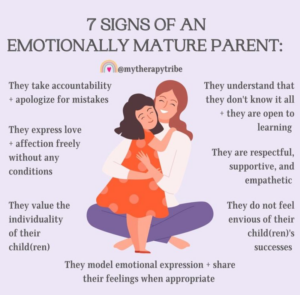
Source: https://www.linkedin.com/posts/toronto-psychologists_emotional-maturity-means-having-the-self-control-activity-7092340431186792449-fhCq/
Resources to check out
– How latent vulnerability plays out over a child’s life – UK Trauma Council
– Toddler Experts (@biglittlefeelings) • Instagram photos and videos
– Good Inside with Dr. Becky on Apple Podcasts
– The Book You Wish Your Parents Had Read (and Your Children Will Be Glad That You Did): THE #1 SUNDAY TIMES BESTSELLER: Perry, Philippa: 9780241251027: Amazon.com: Books
– Battat Education Eggxpress Yourself! Match & Learn Eggs : Target
– Dealing With Feeling Series 8 Books Collection Set By Isabel Thomas (Shy, Worried, Angry, Caring, Happy, Jealous, Proud & Sad): Isabel Thomas: 9781398258778: Amazon.com: Books