



11 Dec Launching the 2026 Face It State Policy & Budget Agenda
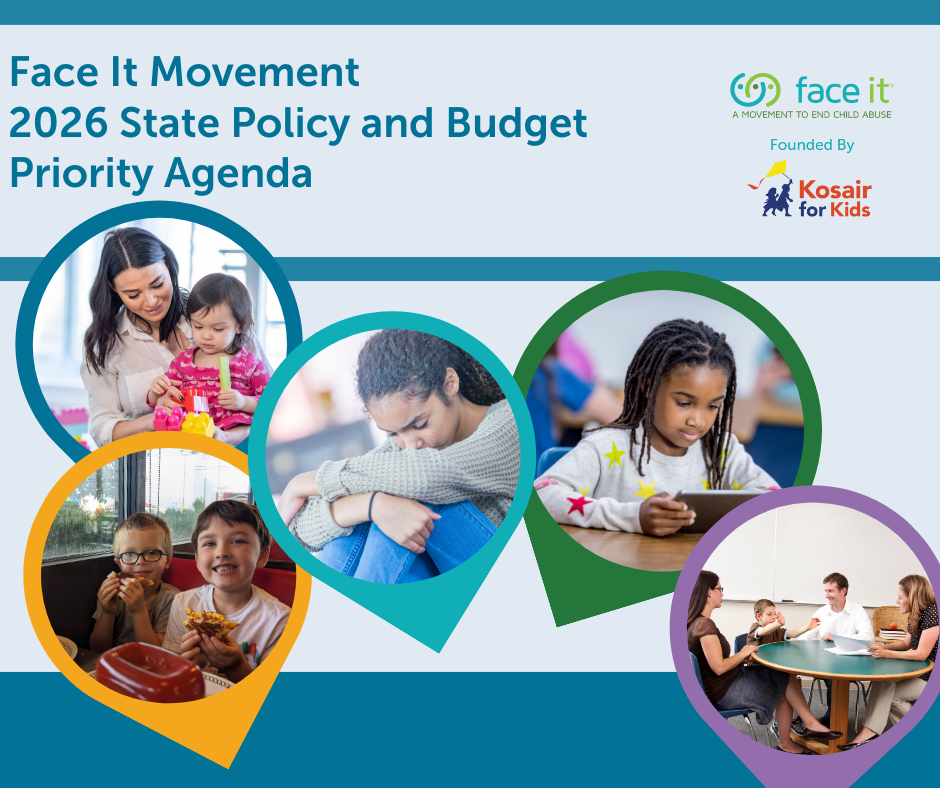
 January marks the start of the new year and the start of Kentucky’s 2026 biennial budget session. The Face It Policy Team has developed an agenda of critical priorities that will increase child safety and provider capacity, and expand investments for critical family supports.
Join the Kosair for Kids Face It Movement in advocating for the following policies:
Protecting Children in Schools
Schools can create safe environments for kids to connect with their peers and learn from trusted teachers by strengthening their ability to protect students from adults with substantiated sexual misconduct reports.
Kentucky should:
— Require thorough background and reference checks for all potential public and private school employees.
— Mandate all potential public and private school employees disclose any prior investigations or punitive actions related to sexual misconduct within the previous year.
— Promote prevention by implementing comprehensive training for all educators on sexual misconduct, grooming, and appropriate communication with students.
By strengthening these safeguards, we can prevent child abuse and promote safe learning environments for every child.
Supervised Parenting Time
For kids who are separated from their parents because of involvement with the child welfare system, time spent together through supervised parenting time – often still referred to as supervised visitation – is critical.
By expanding investments in supervised parenting time programs, Kentucky can:
— Create opportunities to strengthen the parent-child relationship
— Promote healing and reunification
— Improve outcomes for parents and children
— Reduce costly system involvement
Parent Engagement Meetings
For years, Kentucky communities have worked to bolster connections and trust between parents who are at risk of CPS involvement for educational neglect, school staff, and service providers through Parent Engagement Meetings (PEMs).
— PEMs serve students in K-5 whose parents do not have active CPS cases.
— Parents are invited to attend a PEM for support when teachers have educational concerns about a student that could eventually require a report to CPS.
— Parents, school staff, and a facilitator develop an action plan that removes barriers to school attendance and immediately connects parents with needed resources.
By expanding investments for Parent Engagement Meetings throughout the Commonwealth, Kentucky can ensure that every family with school-age children has access to this preventative resource.
Ensuring Quality Child Care for Children with Disabilities
Every family deserves a child care program that fosters their children’s learning, growth, and connection to caring teachers and peers, as well as the peace of mind of knowing the staff are trained and prepared to safely care for them. However, due to workforce challenges and financial constraints, children with disabilities are less likely to be enrolled as they typically require more individualized care which requires higher staffing costs. Data also shows that young children are three times more likely to be expelled from a child care program than children in K-12 schools, largely due to challenging behaviors associated with disabilities, mental health needs, or chronic health care conditions that educators may not be equipped to respond to.
By requiring annual training for child care providers on supporting children with disabilities and removing barriers to accessing diagnosis and therapy services, Kentucky can ensure every child has access to high quality child care.
Protecting Children from Grooming Behaviors
We all have a role to play in keeping kids safe from abuse, but not all red flags for abusive behaviors, such as grooming, are easily recognizable or even illegal. Grooming is a pattern of complex and deceptive behaviors used by perpetrators to sexually exploit kids in person and online and avoid detection. Behaviors that can appear to be normal rapport-building or mentoring are actually harmful tactics used to develop an emotional connection and gain the child’s trust through manipulation and influence.
In a study of youth’s experiences with online grooming:
— 40% of all respondents (and 47% of girls) had been approached by someone who was trying to “befriend and manipulate” them.
— 65% had an “online-only contact” try to get them to move their public conversation to a private chat on a different platform.
— 40% experienced someone online asking for inappropriate pictures, including 28% of kids aged 9-12.
Kentucky should hold adults accountable for grooming behaviors directed at anyone under the age of 14 and hold adults in positions of special trust or authority accountable for grooming behaviors directed at a child of any age. By criminalizing grooming behaviors directed at children, we can take an important step towards preventing child sexual abuse from occurring.
Ready to take action? Here are a few easy things that you can do to advocate for Kentucky kids:
— Check out the 2026 Face It Movement State Policy & Budget Priority Agenda and share it on social media, with people in your social circles, and professional networks.
— Use this legislator look up tool to find your state legislator. Then call, email, or schedule a meeting with them to share why these policy changes and budget investments are important for kids and families. If you haven’t contacted an elected official before, here are some tips.
— Track the progress of bills that keep kids safe and families safely connected by using Kentucky Youth Advocates bill tracker (joining live in January!).
— Stay tuned for updates on other issues the Face It policy team is following and supporting throughout the legislative session on the Face It blog, social media channels, and Face It Friday emails.