


27 Apr “Laser Rain for When We Go to the Moon”
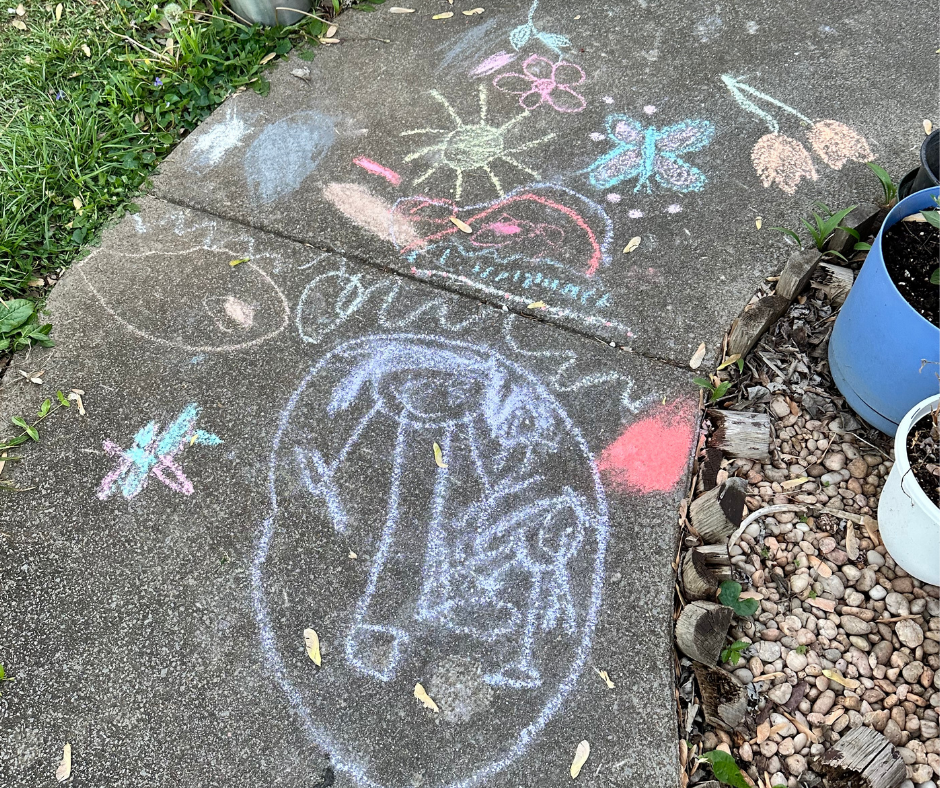
 Earlier this month, while visiting my family for Easter, my young nieces asked me to play outside with their new chalk. We were giggling, drawing silly pictures all over the drive, seeing who could use up a piece of chalk the fastest, and making sure every color was used. I love hearing their conversations about things they’re interested in and hearing them tell stories their imaginations have created. After a story about space (I’m sure that stemmed from the recent space flight around the moon) my niece excitedly tells me to look at her most recent drawing of three stick figures in a bubble.
Auntie look! It’s me, you, and AJ in a spaceship. We gotta be safe from the laser rain when we go to the moon!
That’s the keyword, SAFE. They both feel safe around me to want to be crammed into a tiny chalk bubble, buckled in a spaceship, or just spending time drawing outside. And they’re right. I am a safe adult. That got me thinking about their experiences and interactions and what safe means to them? What makes them feel safe? What do I do that makes them feel safe?
We encourage parents and caregivers to teach their children to identify trusted adults and that trusted adults can help them if they need. While that is helpful, the more we learn about child abuse and neglect, trust only goes so far. “Research shows that the majority of abuse is perpetrated by someone the child knows well. This means that children are often abused or neglected by the very adults they should be able to trust.”
The Monique Burr Foundation emphasizes that
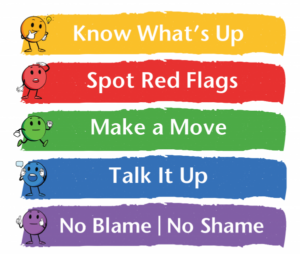
MBF 5 Safety Rules
“A Safe Adult is someone a child can go to if they ever feel unsafe, have ever been hurt, or if they’re not sure if a situation is unsafe. Safe Adults should be someone who:
– is an adult that can get them help if they’re ever hurt or unsafe.
– doesn’t break the Safety Rules, or try to get the child to break them.
– the child feels comfortable with and can easily talk to them about things that may be difficult to talk about.
– the child can trust to keep them safe.
Children should also be taught that if they have a Safe Adult now, and sometime in the future that Safe Adult doesn’t make them feel safe, they can always choose another Safe Adult.” Learn more about the 5 Safety Rules!
Kids are taught what is safe and not safe from an early age, and for them, that concept can be easier to grasp than “trust” since that can be manipulated. A person who is trusted by a child and family can be unsafe. Using “safe adult” puts the focus and responsibility on the adult to keep the child safe, rather than on the child’s feeling of trust.
I do not have children of my own, but am around children regularly. Although I don’t have the same amount of interactions with kids as a parent or caregiver, it’s important to know that keeping kids safe is an adult responsibility and all Kentucky adults are mandated reporters of child abuse and neglect. Anyone who is around children can benefit from increasing their knowledge and understanding of the signs of abuse and neglect, knowing their role as a safe adult, and learning how to identify who safe adults are and why.
Are you a safe adult? What does that look like and how do you show up? I show my nieces through my words and actions that I am a safe adult and that I can be trusted. And it’s clear that they recognize that and feel safe enough to express themselves around me, and if ever needed, come to me with things that a safe adult can help with. I know this isn’t the reality for many kids but I’m hopeful that we as adults, whether we have kids or are around them, find ways to show them that they are safe, valued, and loved. And maybe, there will be more of us tucked safely in the rocket bubble on our way to the moon – and even in our everyday spaces.